
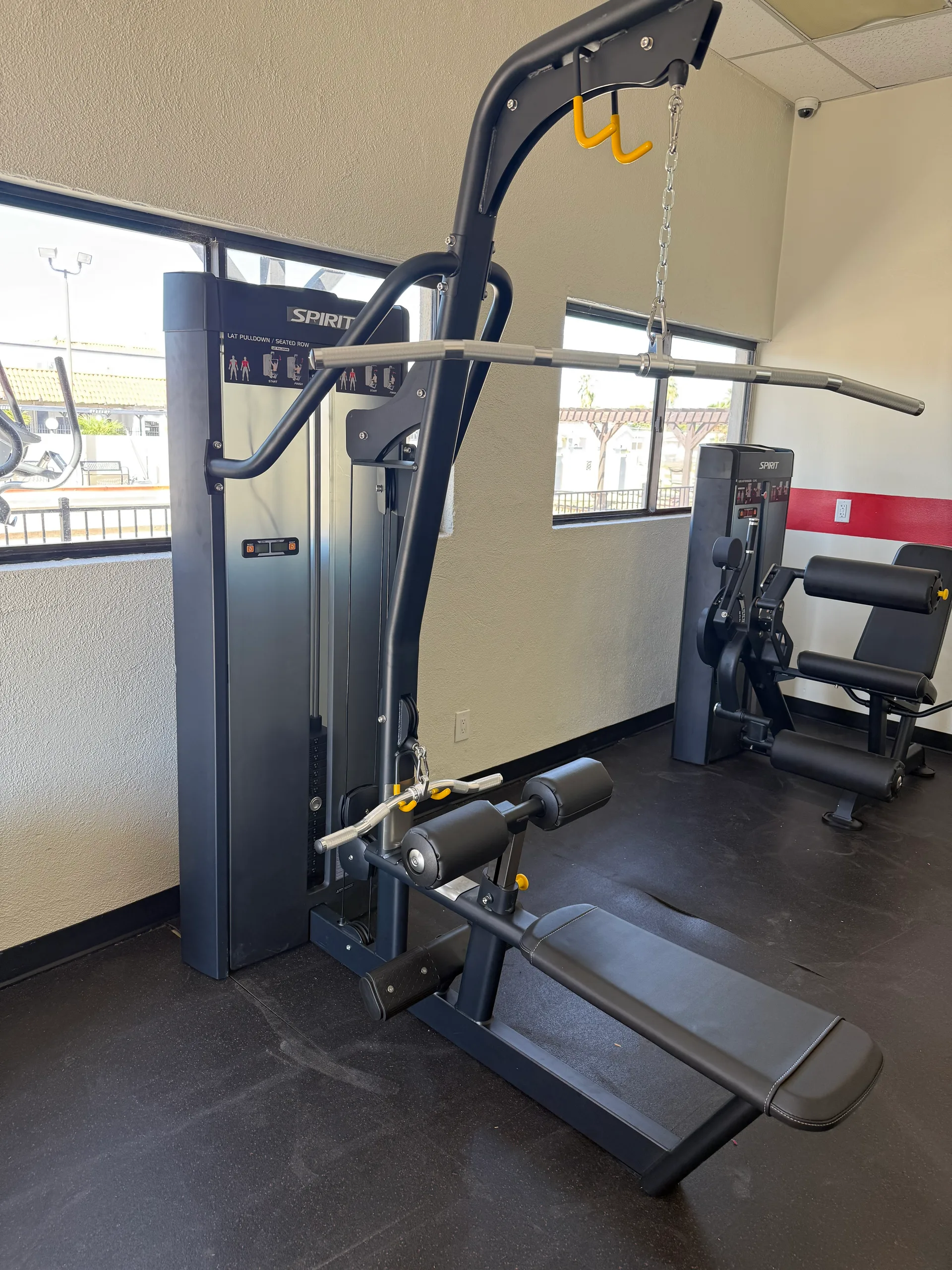
Supervised use, not max load
Medical & Rehab
Physical therapy clinics, rehab centers, and medical fitness
Physical therapy and rehab clinics are one of DOF's steadiest verticals — recumbent and upright bikes, ellipticals and selectorized strength equipment sized for controlled, supervised use rather than max-load training. Since 2012, Discount Online Fitness has outfitted spaces like these nationwide from its DFW Airport, Texas warehouse.
A clinic's equipment decision is driven by what a patient can safely get on and off of under supervision, not by peak output — that's why recumbent and semi-recumbent bikes, low-step ellipticals, and selectorized (not free-weight) strength equipment dominate this segment specifically.
The build guide
How to equip a physical therapy or rehab floor for supervised use
A clinic buys equipment on a different question from a gym: not how much a machine can load, but what a patient can safely get on and off of under supervision, and how repeatably a therapist can set it. That is why recumbent and semi-recumbent bikes, low-step ellipticals and selectorized strength dominate this segment, and why a clinic floor carries more circulation than a gym floor. Downtime is also different here — a machine out of service is a treatment schedule disrupted, not a member inconvenienced — so warranty and service terms are part of the specification, not an afterthought.
Physical therapy clinics are one of our steadiest verticals, alongside rehab centers, chiropractic offices and hospitals. Below is how we plan a clinic floor: what a good one looks like for supervised, graduated work, what fits in a treatment space, the equipment that suits patients rather than athletes, and how we help from the first consultation to a warranty spelled out in writing.
Design
Designing for the patient, not the athlete
Six decisions that make a rehab floor safe to supervise and simple to run.
Circulation first
Clinic floors carry more circulation than a commercial gym: hold the ADA 60 in diameter turning space and a 36 in minimum clear route, and leave room for a therapist to stand beside every machine. At 25–50 sq ft per station (ACSM’s range), a rehab room fits fewer stations than a gym of the same size, on purpose.
Entry and exit decide the machine
Step-through recumbent bikes, low-step ellipticals and selectorized stations with easy entry and exit are the segment for a reason: a patient recovering a hip or a knee cannot swing a leg over a saddle. Numbered seat and pedal adjustments let a therapist reproduce a setting session to session.
Universal design is a specification
ASTM F3021 is the standard for universal design of fitness equipment for inclusive use by people with functional limitations. Plan at least one accessible machine of each type on an accessible route, with the 30 by 48 in clear floor space beside it.
Selectorized, not free-weight
The machine sets the path and limits the range, and a pin selects load in small steps — exactly what graduated rehab needs. Leg extension/curl, pulldown/row and press stations cover most protocols; a functional trainer adds cable work at low load. Free bars stay out of the treatment room.
Power, flooring and hygiene
Treadmills need their own dedicated 120 V 20 A circuit (NEMA 5-20R, isolated neutral and ground); self-powered bikes and ellipticals need none. Rubber flooring at 8 mm under cardio and strength, sealed and wipeable — a clinic floor is cleaned between patients.
Downtime is a schedule problem
One bike out of service moves a day of appointments. Buy from major lines with living parts support, choose the tier with the longer warranty on the machines a protocol depends on, and put On Site Fitness Service’s preventive maintenance on the calendar from day one.
What fits
What fits: three clinic floors
From a single treatment room to a hospital wellness floor. Each mix is quoted from the live inventory further down.
The treatment room
300–600 sq ft · a PT or chiropractic practice
One or two therapists, patients one at a time, every machine set and reset per session.
- A recumbent bike and an upright bike with low step-through
- A low-step elliptical or a treadmill with handrails
- A leg extension/curl combo and a pulldown/row station
- A functional trainer for low-load cable work; mats, bands and light dumbbells
Condition tier: Cleaned & Serviced on the strength, Remanufactured on the bike a protocol runs on every day — the 90-day parts-and-labor warranty matters more here than the paint.
The rehab floor
800–1,500 sq ft · a multi-therapist clinic
Several patients on the floor at once, each supervised, with a full range of protocols.
- Two or three recumbent bikes, an upright bike, a low-step elliptical, a handrail treadmill
- A selectorized line: leg extension/curl, leg press, pulldown/row, chest press, shoulder press
- A functional trainer, parallel bars and a stair-training area
- Light dumbbells, kettlebells, balance and mat area
Condition tier: Remanufactured on the cardio patients use every session, Cleaned & Serviced on the selectorized line. Extended coverage across the cardio is usual here.
The hospital or medical fitness center
1,500+ sq ft · institutional wellness or cardiac rehab
Clinical and community users in one room, a purchase-order process, freight to a campus.
- A cardio bank of recumbent and upright bikes, ellipticals and treadmills, all on dedicated circuits
- A full selectorized circuit sized to the ADA clearances
- Functional trainers and a supervised free-weight corner
- Quoted as one package, delivered to the campus dock on freight-receiving hours
Condition tier: Mixed by zone and quoted as a package with the warranty terms written in — the way our Dallas healthcare institution order was handled.
Equipment options
Equipment options by zone, from live inventory
Real in-stock machines chosen for supervised use, at their lowest available tier and before freight. Warranty terms per tier are stated on every quote.
Recumbent and upright bikes
The first machines on any rehab floor: step-through recumbents for hips and knees, uprights for patients further along. Most are self-powered and need no outlet.
 In stock
 Matrix H7XE Hybrid Cycle - U
 In stock
 Precor RBK 835 Recumbent Bike - U
 In stock
 Precor UBK 835 Upright Bike - U
 In stock
 Spirit CR800ENT Recumbent Bike w/Touchscreen - U
Low-impact cardio
Ellipticals with a low step-up and treadmills with handrails for gait work — chosen for the patient who can walk but not yet run.
 In stock
 Precor 932i Experience Series Treadmill - U
 In stock
 Cybex 750A Lower Body Arc Trainer - U
 In stock
 Freemotion e22.9 Total Body Elliptical - U
 In stock
 Matrix T1XE Treadmill - U
Selectorized strength for graduated loading
Leg extension/curl, pulldown/row, press stations — pin-select load in small steps, guided paths, easy entry and exit.
 In stock
 Precor Experience Strength S Line Pulldown - U
 In stock
 Precor Experience Strength S Line Seated Row - U
 In stock
 Life Fitness Signature Calf Extension-U
 In stock
 Freemotion Epic Seated Leg Curl - U
Cable work at low load
A functional trainer for rotational and cable protocols at light resistance, in one footprint beside the mat area.
 In stock
 Star Trac Instinct Dual Adjustable Pulley - U
 In stock
 Life Fitness OSDAP Optima Series Dual Adjustable Pulley - U
 In stock
 Nautilus Cable Crossover - U
 In stock
 TKO Light Functional Trainer - U
How we help
How we help — specified for supervision, warranted in writing
A clinic order is a specification conversation first, and the warranty terms go on the quote where a practice manager can read them.
- 1
Tell us the protocols and the room
Which populations you treat, the machines your protocols depend on, and the room with its ADA clearances. We match real machine dimensions and step-through heights to the space and the patients before anything is quoted.
Equipment consultation → - 2
Warranty terms spelled out upfront
Cleaned & Serviced carries 30 days parts and labor, Remanufactured 90; extended coverage is available at purchase. We put the tier and its terms on every line of the quote because downtime on a clinic floor is a schedule problem.
Warranties → - 3
Freight to a clinic or a campus
Delivery is quoted against the real destination — a strip-center practice with a front door or a hospital campus with freight-receiving hours — never a flat estimate. Installation is available through Fit Supply’s crews.
Delivery & installation → - 4
Keep the floor in service
On Site Fitness Service provides scheduled preventive maintenance and repair, with the written record a practice keeps. A machine that fails gives no warning on a rehab floor; inspected machines do.
Service & maintenance →
Avoid these
The mistakes that make a rehab floor hard to use
Each of these costs a therapist time every session.
Gym bikes on a rehab floor
A saddle a patient has to swing a leg over is a machine half your patients cannot use. Step-through recumbents first.
Spacing like a gym
Machines placed at gym density leave no room for a therapist beside the patient or a chair to turn. Hold the 60 in turning space and the 36 in route.
Free weights as the strength plan
A pin-select station loads in small, repeatable steps and guides the path. That is what graduated protocols need.
The cheapest tier on the daily machine
The bike every protocol runs on should carry the longer warranty. Put the savings on the stations used once a week.
No service schedule
A down machine moves a day of appointments. Preventive maintenance on the calendar from day one.
Why we can say this
Physical therapy clinics, rehab centers, chiropractic offices and hospitals are one of DOF’s steadiest verticals, and a Dallas healthcare institution’s wellness space is one of our published case studies. Our sister company Fit Supply specifies rehab floors for graduated work, and On Site Fitness Service keeps them running.
The scope
What we handle for Medical & Rehab
Equipment consultation
Recommendations built around supervised, controlled use — entry/exit height, adjustability, and predictable resistance rather than max-load capacity.
Procurement
Sourcing a specific rehab-appropriate model on request, including for a multi-room clinic buying more than one unit.
Warranty
A clinic can't have a machine down mid-treatment-plan — warranty terms are spelled out on the quote before you buy, not after something breaks.
Service afterwards
On Site Fitness Service is available for ongoing maintenance so a clinic isn't improvising a repair path after the sale.
How we handle it
How we plan for Medical & Rehab
Supervision level shapes the recommendation
Tell us the resident or patient population and typical supervision level when you request a quote — an independently-used senior recumbent bike and a therapist-supervised rehab session call for different adjustability and resistance ranges, even on similar-looking equipment.
Warranty terms matter more here than in most segments
A clinic's equipment downtime is a scheduling problem for real patients, not just an inconvenience — we treat warranty clarity as part of the quote, not an afterthought.
In short
Physical therapy clinics are one of DOF's steadiest verticals, alongside rehab centers, chiropractic offices and hospitals. Equipment recommendations for this segment prioritize supervised, controlled use over max output, and warranty terms are spelled out upfront given how disruptive equipment downtime is to a real treatment schedule.
One of DOF's steadiest verticals — physical therapy clinics, rehab centers, chiropractic offices and hospitals.
Equipment we supply here
Shop all equipment In stock
 Cybex 626AT Total Body Arc Trainer - U
In stock Cybex 750A Lower Body Arc Trainer - U
 In stock
 Cybex 750AT Total Body Arc Trainer - U
 In stock
 Cybex 770C Upright Bike w/E3 Console - U
 In stock
 Cybex 770R Recumbent Bike w/E3 Console - U
 In stock
 Cybex 770T Treadmill w/E3 Console - U
 In stock
 Cybex 771A Lower Body Arc Trainer-U
 In stock
 Cybex 771AT Total Body Arc Trainer - U
Frequently asked questions
Do I get a warranty on used equipment?
It depends on the condition tier. As-Is equipment carries no warranty and is sold at its stated condition. Cleaned & Serviced includes a 30-day parts-and-labor warranty. Remanufactured includes a 90-day parts-and-labor warranty. Full terms are in our Terms and Conditions.
Which condition tier should I choose?
It depends on the tradeoff you care about: Cleaned & Serviced if function per dollar matters most — it arrives mechanically serviced but keeps its cosmetic wear, since touch-up isn't included in that tier. Remanufactured if appearance matters too — repainted, worn parts replaced with new, made mechanically sound. Tell us the use case when you request a quote and we'll recommend one rather than leave it to guesswork.
Who services the equipment after I buy it?
Our sister company On Site Fitness Service runs dedicated repair and preventive-maintenance programs. Ask about a service plan when you request your quote, especially for a space nobody is watching day to day.
How fast can equipment ship once I order?
It depends on the specific machine, the condition tier, and freight to your location — your quote will include a real delivery estimate, not a generic lead time.
Guides worth reading first
All guidesBuying Used
Cleaned & Serviced vs. Remanufactured
What each tier actually includes, what it costs you to step up, and how to decide
Read the guide →Buying Used
Is Used Commercial Gym Equipment Worth It?
The comparison that actually matters is used commercial vs. new consumer-grade
Read the guide →Buyer Guides
Used Gym Equipment Delivery: What to Expect
Curbside is the standard, installation is a real service, and the delivery-day inspection protects you
Read the guide →Related services
Ready for a real quote?
Tell us what you're outfitting and we'll get back to you with real, in-stock options.